Booky Here: Deacon King Kong

When I was growing up, I considered a great number of fictional characters my personal friends.

I was the kid who read Charlotte’s Web in a corner while other birthday party attendees did whatever it is party attendees do.

I would run around barefoot outside with Laura Ingalls. I’d strive to make Kristy Thomas proud at every babysitting gig. I worshipped Jo March ( a faith I still practice).

I know what you’re thinking; “Cliche much?” to which I say “I will find you in the night and dedicate my life to being your worst nightmare if you ever scoff at my friends again.”

Glad we cleared that up.

A new friend has entered my imaginary social circle. Wait…no…that’s not true. An entire community has moved in and made themselves at home in my heart. Sure, there’s a lot of drinking, some murders (maybe accidents?), and a smattering of drugs, but there’s also cheese from Jesus and I can’t say no to that.

Deacon King Kong has blessed my life with Sportcoat, Hettie, the Elephant, Potts, Hot Sausage, Sister Gee, and a carousel of genuine, complicated, and engaging people that now live in my memory as clearly as those not born of ideas and ink.

Reality in the Echoes of Fiction

Committing to fictional connections comes with plenty of bonuses:

  • They can’t hurt us, we can’t hurt them.
  • There are no restrictions on our socialization.
  • Our partners won’t mind if they’re in bed with us.
  • They can’t judge our questionable choices.

Unless you end up starting a fight club and beating the shit out of yourself, it’s really an ideal relationship.

They can also show us things we need to see that we might not notice or accept otherwise. Even an unreliable narrator has our trust the moment we open the book. We believe in them with all the devotion we can muster. So, when a character exposes a truth, we can see it as a reflection.

Deacon King Kong lives in a world of memory, where the intangible holds the most power. All the clues necessary for navigating the path ahead are hidden throughout the trenches from which we came. We can’t go forward until we go back.

Isn’t that what we hope for now? An authentic understanding of how we got here so we can be free to start tomorrow differently?

Time is of the Essence

Our primary guide through the Cause Houses of 1969 Brooklyn is a wandering fellow who lives deeply in the moment while everyone in his life pesters him with questions like ‘what are you going to do?’ and ‘remember when you did this?’

Cuffy Lambkins, a.k.a. Sportcoat, a.k.a Deacon King Kong, simply living minute by minute, still spending his days arguing with his wife Hettie (despite her death), always looking for his next drink, is wanted for the attempted murder of well-known drug dealer, Deems Clemens.

Why? Well, because Sportcoat shot him. Point blank. In broad daylight. In front of a lot of people.

Why? Well, not even Sportcoat knows and besides, he’s not sure it really happened anyway. Life goes on as usual.

And so it goes for everyone in the Cause Houses. Their situations stubbornly remain the same while the world around them continues to grow in strength and wealth. Sure, they can have all the hopes and dreams they want, but in reality their futures are decided for them.

"Life in the Cause would lurch forward as it always did. You worked, slaved, fought off the rats, the mice, the roaches, the ants, the Housing Authority, the cops, the muggers, and now the drug dealers. You lived a life of disappointment and suffering, of too-hot summers and too-cold winters, surviving in apartments with crummy stoves that didn't work and windows that didn't open and toilets that didn't flush and lead paint that flecked off the walls and poisoned your children, living in awful, dreary apartments built to house Italians who came to America to work the docks, which had emptied of boats, ships, tankers, dreams, money, and opportunity the moment the colored and the Latinos arrived. And still New York blamed you for all its problems. And who can you blame? You were the one who chose to live here, in this hard town with its hard people, the financial capital of the world, land of opportunity for the white man and a tundra of spent dreams and empty promises for anyone else stupid enough to believe the hype."   

Sportcoat inadvertently sets in motion a series of life changing events that reverberates throughout and beyond the Cause. Suddenly, everyone looking for an Out (be it from the Cause, a job, a marriage, a life) finds their door. But the doors for the Black and Latino characters, (Hattie, Sister Gee, Deems) go nowhere, while the doors for Thomas Elefante (an Italian boss ready to settle down) and Kevin Mullens (an Irish cop looking forward to retirement) lead the white men right to where they want to be.

"Sister Gee stared at her neighbors as they surrounded her, and at that moment she saw them as she had never seen them before: they were crumbs, thimbles, flecks of sugar powder on a cookie, invisible, sporadic dots on the grid of promise, occasionally appearing on Broadway stages or on baseball teams with slogans like 'You gotta believe,' when in fact there was nothing to believe but that one colored in the room is fine, two is twenty, and three means close up shop and everybody go home; all living the New York dream in the Cause Houses, within sight of the Statue of Liberty, a gigantic copper reminder that this city was a grinding factory that diced the poor man's dreams worse than any cotton gin or sugarcane field from the old country. And now heroin was here to make their children slaves again, to a useless white powder."          

Time is the same, forwards and backwards. Sportcoat, however, disregards time which leaves it struggling to catch up with him. Much like Earl, a hitman sent after Sportcoat, time always seems to be two steps behind, leaping forward into walls as Sportcoat (unknowingly) evades its grasp. It’s a breathless task to follow him and it’s worth every second.

What to Count On

James McBride creates nuanced humans as easily as God does in the book of Genesis, perhaps more so since, as far as we know, no ribs were needed. Each character is so authentically crafted, major and minor players alike, pulsating off the page with their fears, desires, and joys. I loved every single one of them.

Here’s my favorite twist: Deacon King Kong is funny.

Yeah, you heard me (read me?).

This novel, eloquently weaving together themes of race, religion, addiction, grief, power, and poverty is laugh out loud hysterical.

I don’t say this (write this?) lightly.

What a delight, what an experience, what a ‘stop everything you’re doing and live with this story right here and now’ moment to be lucky enough to have as the same author describes cheese as thus:

"This was fresh, rich, heavenly, succulent, soft, creaming, kiss-my-ass, cows-gotta-die-for-this, delightfully salty, moo-ass, good old white folks cheese, cheese to die for, cheese to make you happy, cheese to beat the cheese boss, cheese for the big cheese, cheese to end the world..."

And then later hits you with this:

"And there they stayed, a sole phenomenon in the Republic of Brooklyn, where cats hollered like people, dogs ate their own feces, aunties chain-smoked and died at age 102, a kid named Spike Lee saw God, the ghosts of the departed Dodgers soaked up all possibility of new hope, and penniless desperation ruled the lives of the suckers too black or too poor to leave, while in Manhattan the buses ran on time, the lights never went out, the death of a single white child in a traffic accident was a page one story, while phony versions of black and Latino life ruled the Broadway roost, making white writers rich-West Side Story, Porgy & Bess, Purlie Victorious-and on it went, the whole business of the white man's reality lumping together like a giant, lopsided snowball, the Great American Myth, the Big Apple, the Big Kahuna, the City That Never Sleeps, while the blacks and Latinos who cleaned the apartments and dragged out the trash and made the music and filled the jails with sorrow slept the sleep of the invisible and functioned as local color." 

How’s that for a sentence that slaps you in the face?

What Comes Next

The cast of Deacon King Kong is every actor’s dream. James McBride is adapting the novel himself for a television miniseries (glorious!) and I’d like to take this opportunity to nominate Ron Cephas Jones for the role of Sportcoat.

I will, of course, irrationally take it personally if he is not cast.

Support Harriett’s Bookshop by grabbing a copy of Deacon King Kong or donate to make sure they can have a permanent home.

Also for Triangle locals, there’s a new book cafe open in Durham, Rofhiwa. It definitely deserves your attention.

The ToB and Me: A Love Story in Ongoing Acts

My general skill set is limited to mostly useless things. For example, when I was dating, my OkCupid profile stated very clearly you could always count on me knowing the name of that one actor in that one thing.

My husband agrees this still remains true.

I’m also very good at making pointless, impossible goals.

I’m going to watch every single movie nominated for an Oscar! (Never happens).

I’m going to listen to every podcast Vulture recommends! (Absolutely not).

I’m going to exercise! (Stop it).

I’m going to get my kids to bed on time! (Bullshit).

Enter, the Tournament of Books.

The Cliffs of Insanity

I’m going to read every book that has “competed” in the ToB.

Every. Flipping. Year. This is the goal I make. Per my astounding lack of completion, I’ve never achieved it.

“Oh, come on. You can’t get through 18 books? What the hell are you doing, doom-scrolling on Twitter all day while drinking your eighth cup of coffee and forgetting dinner’s in the oven?”

Wow. That cut me deep.

Here’s the thing, though. It’s not just the 18 books featured every year. I want to read all of them, going back to the first ToB in 2005 and including 2 ToB Camps, 2 Summer Reading Challenges, and 1 Non-fiction Pop Up.

Now, let’s do the math.

No, let’s not do the math. We can agree, it’s a lot of books.

Also, it will happen again next year, which means 18 new books added to the list. Every time I make a dent, the list grows longer. It’s a Hydra.

I can’t let go of it. I’m going to do this. I can do this. Hypothetically before death takes me.

But Why?

It’s important to have dreams.

I’ve loved ToB for many reasons, but primarily I love how it’s managed to diversify and enhance the reading experience.

Directly comparing books to each other and then choosing one to advance is nuts. Books are subjective. Every reader has their own, personal experience with a story that cannot be entirely replicated in another person. What good, then, can come from putting a collection of books into March Madness brackets and whittling it down to one winner?

It’s folly but it works. The ToB succeeds in three distinct ways:

1.) It exposes readers to a unique, well-curated variety of voices and genres. There are books I have profoundly loved that probably wouldn’t have been on my radar otherwise (A Tale for the Time-Being jumps to mind). The ToB covers bestsellers and indie gems, while celebrating diverse authors with extraordinary voices. Each book chosen is its own, stand-alone victory. Even if I reach the end and conclude the story wasn’t for me, I can’t deny the craft involved, the talent on display, the heart that went into it. There’s genuine intent here and it’s expanded my reading experiences significantly.

2.) The judges’ choices and rationales, along with the commentary that follows, has challenged me to be a more thoughtful reader. The ‘winner’ of each ToB bracket is often decided based on the smallest of nuances. The variety of books involved makes this all the more fascinating. Do you know how every movie nominated for an Oscar starts to feel like the same damn film? That never happens with ToB (or at least, hasn’t yet. I do still have 25,000 books to read). Differentiating the strength of each book requires a balanced look that is both technical and personal. I’m a better reader for the work they’ve shared and I am grateful.

3.) It’s fun! There’s suspense, controversy, upsets, underdogs, fallen giants, and a goddamn rooster. What more do you need?

Current Status

I’m working my way through the most recent ToB, which you can read in its entirety here. Thus far, it has failed to disappoint. There have been standouts and letdowns and I’ve loved every minute of it.

Except that one minute which was pretty freaking terrible. Burying that memory deep into the recesses of my brain now.

What I’ve Read So Far (2021 ToB)

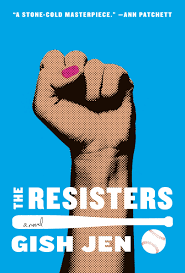
The Resisters by Gish Jen – Confirming all my worst fears about Alexa and her eventual rise to power, Jen’s dystopian novel is disturbingly plausible. However, the trajectory of the story was uneven and the most interesting character felt sidelined too often. But if you’re a fan of baseball and messenger pigeons, you can’t pass this book up.

Red Pill by Hari Kunzru – I didn’t know what to expect from this book and somehow it still wasn’t what I expected. It’s a slow descent into pain and fear, reminding you that too often, when you think you’ve come out on the other side, reality is always ready to strike. Kunzru pieces words together with breathtaking style. There were so many moments I had to stop and sit within his sentences in awe.

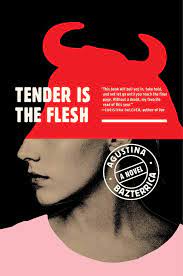
Tender is the Flesh by Augustina Bazterrica – This book fucked me up. I also happened to be reading it when the Armie Hammer news broke and I lost my goddamn mind. Couldn’t eat or even look at meat for months.

A Children’s Bible by Lydia Millet – More on that here.

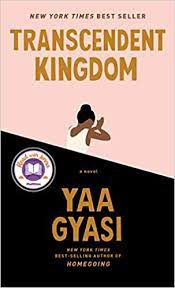
Transcendent Kingdom by Yaa Gyasi – A beauty, from beginning to end. Gyasi’s exploration of the relationship between science and spirituality is both relatable and eye-opening. With God planted in her roots, Gifty, a neuroscientist graduate student, grows up, out, and into the world, reaching for answers. Gyasi dances back and forth through time while managing to build a clear character arch from devout faith to doubt and rejection, landing ultimately at peace, though not resolution. It’s a wonder.

We Ride Upon Sticks by Quan Barry – Hey ’80s fans! Do you love field hockey? Are you super into the Salem Witch Trials? Does Emilio Estevez do it for you? Well, then Happy Birthday! Here’s a gift.

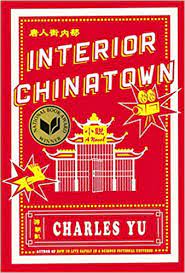
Interior Chinatown by Charles Yu – There is nothing I can say worthy of this novel. I was entertained, I learned a ton of fucked up shit I’d never known before, I gasped, I laughed, I cried, I marveled. Just…by freaking god, read this book.

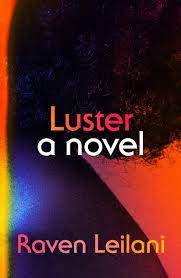
Luster by Raven Leilani – Luster is so casual in its intensity, it’s hard not to classify this book as a thriller. Edie, a young women curious, determined, lost, is a modern day Alice in the Wonderland of early adulthood in NYC. She’s full of want but too often caters to the desires of others (often to her detriment) as characters send her reeling in different directions. Throw in themes on race, capitalism, equality, and sexuality and you’ve got a cocktail that burns on the way down and lingers with warmth.

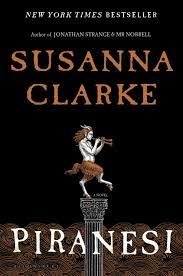
Piranesi by Susanna Clarke – I read this delight while acting in a production of The Tempest. As Piranesi navigates an isolated land with powerful oceans and struggles with an identity crisis, I couldn’t help but tie the stories together, wondering if Piranesi’s story could be the prequel to Caliban’s. This tale is magical. Though your time with Piranesi is brief, his spirit and faith stays with you long after the end. Highly recommend.

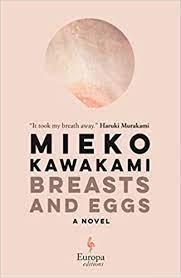
Breasts and Eggs by Mieko Kawakami – I really wanted to love this book. There is so much to praise about Kawakami’s insights and style. Narrated in two parts by Natsu, the first story focuses on her older sister Makiko and niece, Midoriko. Makiko is desperate for breast implants while her daughter categorically rejects the inner workings of her body. The second story belongs to Natsu and her desire to have a baby via sperm donor. Through it all are beautiful passages about every angle of femininity, biological or no. But it becomes preachy and repetitive quickly, the messages hammered into your brain. Despite some wonderful moments, I was relieved when I finally reached the end.

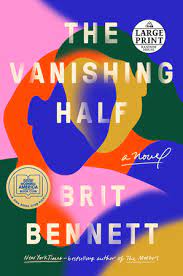
The Vanishing Half by Brit Bennett – A haunting, stunning, can’t-put-down work. I was enraptured from the start, following the differing paths of twin sisters Desiree and Stella. Mixed race with light skin, Stella leaves her family and hometown to live as a white woman while Desiree ultimately remains home with their mother. Race isn’t the only vanishing half at play here. A transgendered man transitions, an elderly woman lives with Alzheimers. The past drips away and yet these incredible, living, breathing characters both yearn for and fear it. Inevitably this will be made into a movie. Ron Howard better not come near it.

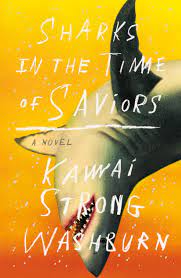
Sharks in the Time of Saviors by Kawai Strong Washburn – This was a completely transportive experience. Washburn’s story of family, traditions, tragedy, and healing is intertwined amongst the supernatural. I often thought of Haruki Murakami as Washburn made extraordinary events feel tangible. Marlon James also came to mind as Washburn gives his characters a genuine voice. In the end, Washburn is truly one-of-a-kind, showing us that miracles are what we make of them.

That Was Long

Yeah, sorry about that. But now I sally forth towards my goal! Which means eventually, you guys will be getting a totally relevant post on Cloud Atlas.

I know. I know. You’re welcome.

Booky Here: A Children’s Bible

Every year I plan on reading every contender for The Morning News’ Tournament of Books. The ToB is one of my most favorite things of all the things, so by golly, I’m going to read the entire list. I’m going to be an active, knowledgable participant. I’m going to leave minimum one comment, bonus points if it manages to be impressive. I’m going to be invested in roosters.

Shocking twist alert!

It never happens.

Second shocking twist alert!

Until now. (dramatic pause) Almost.

True, the 2021 ToB ended nearly a month ago. True, I still have five books to read in order to complete this part of my goal (more on that in a different post). True, the ToB Summer Camp shortlist was just released, adding to my increasingly disturbing ‘to read’ pile.

No matter! I sally forth!

What Does This Have to do with A Children’s Bible?

Ummm. A Children’s Bible was a ToB contender this year.

That’s It?

Yes.

By God.

Nope, this one is by Lydia Millet.

Wow, That Was a Hell of a Segue

And here we are on the other side.

If I could ‘Eternal Sunshine’ my brain in order to read A Children’s Bible without knowing a single thing about it before hand, I would.

A Children’s Bible is absolutely worth the read. I do recommend it. However, I believe prior knowledge of the plot and structure impacted my experience with the novel and not for the better.

Go in blind. Don’t even read the inside flap! Trust me on this one. And then please come back and tell me what it was like.

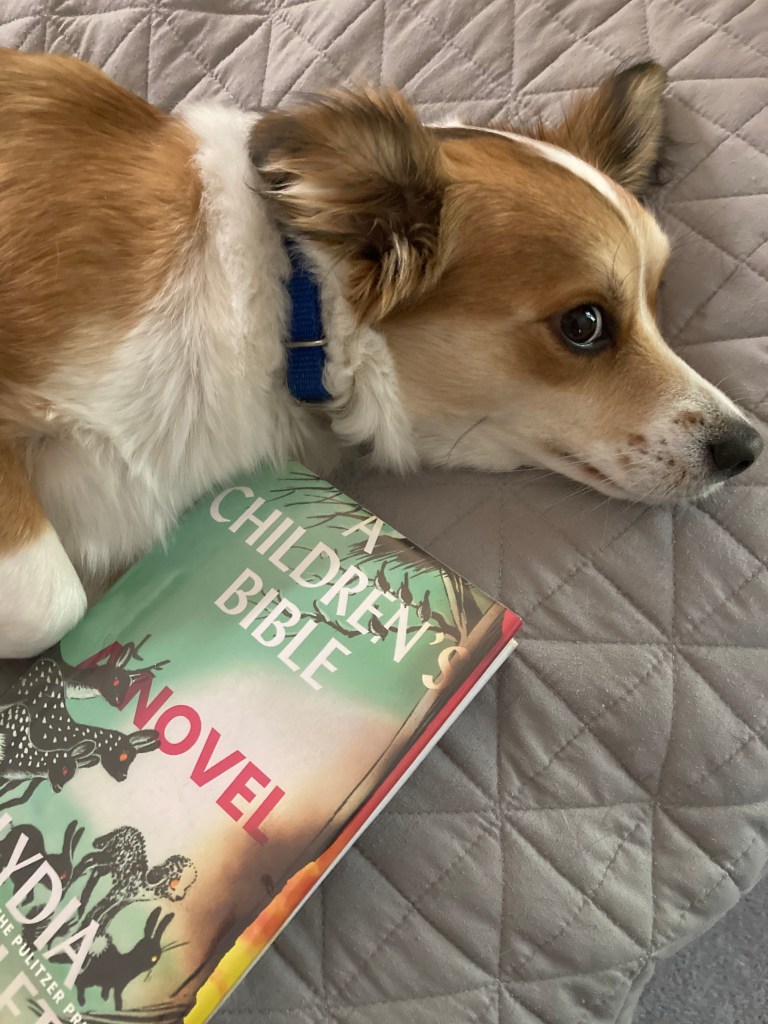
If that’s what you’re going to do then get outta here. Significant information and spoilers are ahead. Here is a picture of my dog Jeff, pondering the themes and meaning of the book, in order to help you avoid even a glance at ruinous words.

Jeff the Dog ponders A Children’s Bible

Hello, humans who have read the book or don’t mind knowing what’s going to happen before it happens. Let’s do this, shall we?

In the Beginning

The End of the World has been on everyone’s minds, ironically since the beginning of time. Each moment since has contributed to the Grand Finale and now, thanks to man-made foreshadowing, we’re getting a good idea of how this is all going down. Naturally, our storytellers have something to say about this.

The Bible, much like a Terrance Malick film, attempts to cover the entirety of existence while highlighting some choice characters and moments, including a talking donkey who doesn’t get the credit he deserves. The average Bible is about 1,200 pages long. Lydia Millet breezes in at a cool 224. Am I saying she’s a better writer than God? Well…she’s certainly more succinct.

When I was young and growing up in a religious household, I had many different kinds of picture Bibles. My favorite one was laid out like a graphic novel. I would read it over and over and over again, enraptured, terrified, desperate. I needed it to understand the world around me and feel secure. I believed each story with my entire heart and I knew, if I could just open my eyes a bit wider, search a bit deeper, I could hear God.

That child would be appalled by the woman she became. Yet, while reading A Children’s Bible, I couldn’t help but remember her with a bit more empathy than I usually do. What are children supposed to do when the world around them doesn’t make sense? Where can they go for answers when there are none?

“Those who trust in their riches will fall, but the righteous will thrive like a green leaf.

Whoever brings ruin on their family will inherit only wind, and the fool will be servant to the wise.

The fruit of the righteous is a tree of life, and the one who is wise saves lives.”

Proverbs 11:28-30 (NIV)

Chapter and Verse

12 youth have gathered at a lakeside mansion with their parents for a summer vacation. Our narrator is Eve, a teenage girl fiercely devoted to her younger brother Jack. A distinct line has been drawn between the kids and their parents, two different worlds living side by side, rarely seeping into each other.

The kids are disgusted with their parents who seem to only be committed to destructive vices and indifferent to their offspring. The parents are just that, never named, all of them Guess Who? characters to be flipped face down and forgotten. Understandable, given the situation. Climate change is having the last laugh and, yes, it’s the End of the World.

Where do the kids place the blame? Squarely on their affluent, clueless, detached, selfish parents. At war are two generations, both of which will never and have never achieved adulthood, a battle between “what can we do?” and “there’s nothing to be done”.

When a catastrophic storm hits, the kids escape, led out of bondage by Burl, a man they discover, by chance, sleeping amongst the reeds.

Oh, and during the storm, the kids took refuge in a wooden treehouse where Jack had gathered as many animals as he could.

Oh! And there are twins who get in a fight and one hits the other on the head with a rock.

Any bells ringing? Trumpets blowing?

Yes, as the story continues, the Bible comes to life in myriad scenarios. This was, in turns, both wonderfully fun and clever, oftentimes sobering and sickening, and so, so distracting.

A Testament

I knew from the start various parts of the Bible would be interwoven throughout the plot. As a result, I sought them out, trying to tie each event and character to a story or parable. I segmented the book mentally as I read.

It wasn’t until the end that I was able to step back and appreciate the book as a whole. It is its own, complete story, with characters alive in our own future But because I was so focused on the Bible story quest, I missed out on natural discoveries, those glorious ‘ah ha’ moments a well crafted book provides.

Millet is best when she trusts the reader to recognize the connections. Occasionally she doubts. Jack, who becomes fascinated with a picture Bible, will often say “Hey! This is just like what happened in my book!” That kind of telling hurts my soul a little bit.

Another example is Mattie, a man who teaches biology, explaining life, how it works, how to care for it, in a way that keeps every child at his feet listening. Eve describes the scenario:

“Biology was the best. It was held in the barn, where Mattie pulled up diagrams on his laptop and projected them onto a whitewashed wall…

Others joined the class, more each day…I’d watch from the open door and see them looking studious, their faces faithfully turned forward. They could have been children in school in a bygone era…

Children who sat there learning from their teachers, full of trust. Secure in the knowledge that an orderly future stretched ahead of them.

They sat quiet, gazing up at the projections…

After a while we were so devoted to those pictures that we were almost disciples.”

A Children’s Bible by Lydia Millet, pages 135-137

The descriptions of the wonder and devotion? Beautiful. Telling us they were like disciples? Just smash me in the face with the King James, please.

There are, however, plenty of moments that are, no pun intended, simply divine, particularly the receiving of the Ten Commandments which was hysterically perfect.

Regardless, Millet creates so much with so little. We recognize these children as both our own and ourselves. We shake our fists at their foes but also know we’ve been complicit. We want to save them, help them at the very least. Millet is telling us we can, but we must do it here and we must do it now.

Revelation

A Children’s Bible is full of chaos and blood. Death, violence, murder, disease, it’s all there.

There’s also love, wisdom, connection, sacrifice, patience, and hope.

The Bible has been used to justify a lot of shit throughout history. It’s a voluminous to-do list, full of contradictions and punishment. Then Jesus comes along to help us make sense of it all and he tells us this:

“Love the Lord your God with all your heart and with all your soul and with all your mind. This is the first and greatest commandment. And the second is like it: Love your neighbor as yourself. All the Law and the Prophets hang on these two commandments.”

Matthew 22:37-40 (NIV)

One of the most beautiful and memorable moments in A Children’s Bible comes when Jack declares he’s solved the “mystery” of the Bible and explains who God and Jesus really represent. I won’t give it away, if you’ve decided to read all this before reading the book. It deserves to be a genuine experience. But the message of both Bibles is clear.

We must take care of each other.

Everything depends on this.

Otherwise we will be left with nothing but wind, and here on Earth the wind will break us.


A Children’s Bible by Lydia Millet is available at Quail Ridge Books, Bookshop, at your local library, and literally anywhere that isn’t owned by Jeff Bezos.