
My general skill set is limited to mostly useless things. For example, when I was dating, my OkCupid profile stated very clearly you could always count on me knowing the name of that one actor in that one thing.
My husband agrees this still remains true.
I’m also very good at making pointless, impossible goals.
I’m going to watch every single movie nominated for an Oscar! (Never happens).
I’m going to listen to every podcast Vulture recommends! (Absolutely not).
I’m going to exercise! (Stop it).
I’m going to get my kids to bed on time! (Bullshit).
Enter, the Tournament of Books.
The Cliffs of Insanity
I’m going to read every book that has “competed” in the ToB.
Every. Flipping. Year. This is the goal I make. Per my astounding lack of completion, I’ve never achieved it.
“Oh, come on. You can’t get through 18 books? What the hell are you doing, doom-scrolling on Twitter all day while drinking your eighth cup of coffee and forgetting dinner’s in the oven?”
Wow. That cut me deep.
Here’s the thing, though. It’s not just the 18 books featured every year. I want to read all of them, going back to the first ToB in 2005 and including 2 ToB Camps, 2 Summer Reading Challenges, and 1 Non-fiction Pop Up.
Now, let’s do the math.
…
No, let’s not do the math. We can agree, it’s a lot of books.
Also, it will happen again next year, which means 18 new books added to the list. Every time I make a dent, the list grows longer. It’s a Hydra.
I can’t let go of it. I’m going to do this. I can do this. Hypothetically before death takes me.
But Why?
It’s important to have dreams.
I’ve loved ToB for many reasons, but primarily I love how it’s managed to diversify and enhance the reading experience.
Directly comparing books to each other and then choosing one to advance is nuts. Books are subjective. Every reader has their own, personal experience with a story that cannot be entirely replicated in another person. What good, then, can come from putting a collection of books into March Madness brackets and whittling it down to one winner?
It’s folly but it works. The ToB succeeds in three distinct ways:
1.) It exposes readers to a unique, well-curated variety of voices and genres. There are books I have profoundly loved that probably wouldn’t have been on my radar otherwise (A Tale for the Time-Being jumps to mind). The ToB covers bestsellers and indie gems, while celebrating diverse authors with extraordinary voices. Each book chosen is its own, stand-alone victory. Even if I reach the end and conclude the story wasn’t for me, I can’t deny the craft involved, the talent on display, the heart that went into it. There’s genuine intent here and it’s expanded my reading experiences significantly.
2.) The judges’ choices and rationales, along with the commentary that follows, has challenged me to be a more thoughtful reader. The ‘winner’ of each ToB bracket is often decided based on the smallest of nuances. The variety of books involved makes this all the more fascinating. Do you know how every movie nominated for an Oscar starts to feel like the same damn film? That never happens with ToB (or at least, hasn’t yet. I do still have 25,000 books to read). Differentiating the strength of each book requires a balanced look that is both technical and personal. I’m a better reader for the work they’ve shared and I am grateful.
3.) It’s fun! There’s suspense, controversy, upsets, underdogs, fallen giants, and a goddamn rooster. What more do you need?
Current Status
I’m working my way through the most recent ToB, which you can read in its entirety here. Thus far, it has failed to disappoint. There have been standouts and letdowns and I’ve loved every minute of it.
Except that one minute which was pretty freaking terrible. Burying that memory deep into the recesses of my brain now.
What I’ve Read So Far (2021 ToB)
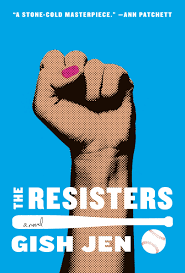
The Resisters by Gish Jen – Confirming all my worst fears about Alexa and her eventual rise to power, Jen’s dystopian novel is disturbingly plausible. However, the trajectory of the story was uneven and the most interesting character felt sidelined too often. But if you’re a fan of baseball and messenger pigeons, you can’t pass this book up.
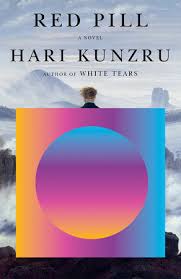
Red Pill by Hari Kunzru – I didn’t know what to expect from this book and somehow it still wasn’t what I expected. It’s a slow descent into pain and fear, reminding you that too often, when you think you’ve come out on the other side, reality is always ready to strike. Kunzru pieces words together with breathtaking style. There were so many moments I had to stop and sit within his sentences in awe.
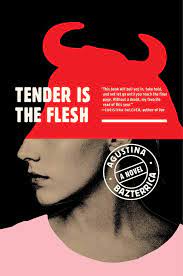
Tender is the Flesh by Augustina Bazterrica – This book fucked me up. I also happened to be reading it when the Armie Hammer news broke and I lost my goddamn mind. Couldn’t eat or even look at meat for months.
A Children’s Bible by Lydia Millet – More on that here.
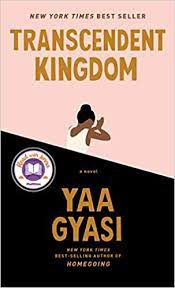
Transcendent Kingdom by Yaa Gyasi – A beauty, from beginning to end. Gyasi’s exploration of the relationship between science and spirituality is both relatable and eye-opening. With God planted in her roots, Gifty, a neuroscientist graduate student, grows up, out, and into the world, reaching for answers. Gyasi dances back and forth through time while managing to build a clear character arch from devout faith to doubt and rejection, landing ultimately at peace, though not resolution. It’s a wonder.
We Ride Upon Sticks by Quan Barry – Hey ’80s fans! Do you love field hockey? Are you super into the Salem Witch Trials? Does Emilio Estevez do it for you? Well, then Happy Birthday! Here’s a gift.

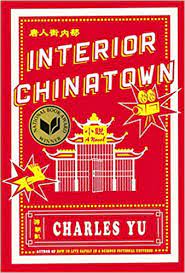
Interior Chinatown by Charles Yu – There is nothing I can say worthy of this novel. I was entertained, I learned a ton of fucked up shit I’d never known before, I gasped, I laughed, I cried, I marveled. Just…by freaking god, read this book.
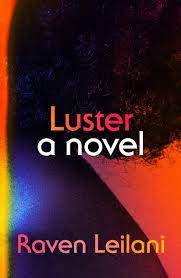
Luster by Raven Leilani – Luster is so casual in its intensity, it’s hard not to classify this book as a thriller. Edie, a young women curious, determined, lost, is a modern day Alice in the Wonderland of early adulthood in NYC. She’s full of want but too often caters to the desires of others (often to her detriment) as characters send her reeling in different directions. Throw in themes on race, capitalism, equality, and sexuality and you’ve got a cocktail that burns on the way down and lingers with warmth.
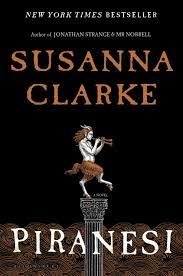
Piranesi by Susanna Clarke – I read this delight while acting in a production of The Tempest. As Piranesi navigates an isolated land with powerful oceans and struggles with an identity crisis, I couldn’t help but tie the stories together, wondering if Piranesi’s story could be the prequel to Caliban’s. This tale is magical. Though your time with Piranesi is brief, his spirit and faith stays with you long after the end. Highly recommend.
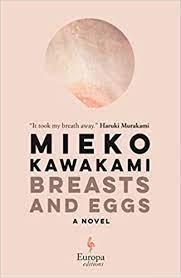
Breasts and Eggs by Mieko Kawakami – I really wanted to love this book. There is so much to praise about Kawakami’s insights and style. Narrated in two parts by Natsu, the first story focuses on her older sister Makiko and niece, Midoriko. Makiko is desperate for breast implants while her daughter categorically rejects the inner workings of her body. The second story belongs to Natsu and her desire to have a baby via sperm donor. Through it all are beautiful passages about every angle of femininity, biological or no. But it becomes preachy and repetitive quickly, the messages hammered into your brain. Despite some wonderful moments, I was relieved when I finally reached the end.
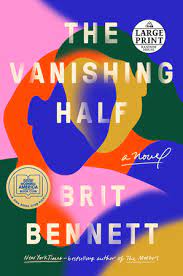
The Vanishing Half by Brit Bennett – A haunting, stunning, can’t-put-down work. I was enraptured from the start, following the differing paths of twin sisters Desiree and Stella. Mixed race with light skin, Stella leaves her family and hometown to live as a white woman while Desiree ultimately remains home with their mother. Race isn’t the only vanishing half at play here. A transgendered man transitions, an elderly woman lives with Alzheimers. The past drips away and yet these incredible, living, breathing characters both yearn for and fear it. Inevitably this will be made into a movie. Ron Howard better not come near it.
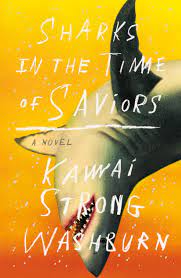
Sharks in the Time of Saviors by Kawai Strong Washburn – This was a completely transportive experience. Washburn’s story of family, traditions, tragedy, and healing is intertwined amongst the supernatural. I often thought of Haruki Murakami as Washburn made extraordinary events feel tangible. Marlon James also came to mind as Washburn gives his characters a genuine voice. In the end, Washburn is truly one-of-a-kind, showing us that miracles are what we make of them.
That Was Long
Yeah, sorry about that. But now I sally forth towards my goal! Which means eventually, you guys will be getting a totally relevant post on Cloud Atlas.
I know. I know. You’re welcome.
 Lemon Squeezy